Billy Steinberg, the Grammy-winning songwriter whose pen gave the world some of the most enduring hits in pop music history, has died at the age of 75 following a cancer diagnosis.
The Los Angeles-based lyricist, described by his family as a “revolutionary lyricist,” leaves behind a catalogue that spans four decades and touches virtually every corner of the pop landscape.
Over the course of his remarkable career, Steinberg worked alongside the biggest names in the industry – Madonna, Whitney Houston, Celine Dion, Cyndi Lauper, and The Bangles among them – crafting songs that didn’t just top charts but embedded themselves permanently into the cultural consciousness.
Ad slot – sponsor or AdSense (hidden on live site)

Even after his long-standing songwriting partnership with Tom Kelly came to a close in the 1990s, Steinberg continued to write, contributing to the careers of modern artists including Demi Lovato and JoJo, demonstrating a creative longevity that few in the industry can claim.
In a moving statement, Steinberg’s family reflected on the deeply personal nature of his work. “His lyrics often began as deeply personal reflections,” they said, “transformed into anthems in which millions found themselves.”
It is a quality that defined his writing throughout his life – an ability to take something intimate and render it universal. “Billy Steinberg’s life was a testament to the enduring power of a well-written song – and to the idea that honesty, when set to music, can outlive us all.”
The family also acknowledged the many accolades Billy Steinberg received throughout his career, most notably a Grammy Award for his contributions to Celine Dion’s landmark 1996 album Falling Into You.
Yet, as those closest to him understood, the trophies were never the point. “What mattered most was not recognition, but connection,” his family noted, “the magic of hearing a crowd sing back something that once lived only in his notebook.” It is perhaps the most fitting epitaph a songwriter could ever receive.

His son Ezra offered his own heartfelt tribute, speaking to the man behind the music. “As a father, he passed down not only his love of music, but his discipline, integrity, and reverence for great songwriting,”
Ezra said. “He believed in building things that last – in art, in relationships, and in legacy.” Those words speak volumes about a man who approached his craft not as a commercial exercise, but as a lifelong calling.
Steinberg’s breakthrough arrived in 1984 when Like A Virgin – written alongside Kelly – became a global phenomenon for Madonna, reaching number one in the United States and catapulting the duo into the front rank of pop songwriters. It was the beginning of an extraordinary run.
Ad slot – sponsor or AdSense (hidden on live site)

Two years later came True Colors, Cyndi Lauper’s deeply affecting 1986 hit, followed swiftly by Whitney Houston’s So Emotional in 1987. Each song bore the hallmarks of Steinberg’s craft: emotional honesty, lyrical precision, and an uncanny ability to locate the feeling at the heart of a song and make it sing.
His later output proved equally impressive. He wrote Don’t Hold Your Breath for Nicole Scherzinger and Too Little Too Late for JoJo, both of which became significant hits in their own right.
In 2011, his contribution to popular music was formally recognised when he was inducted into the Songwriters’ Hall of Fame – an honour that placed him among the true greats of his generation.

News of his passing prompted an outpouring of tributes from the artists whose careers he had shaped. Cyndi Lauper, who collaborated with Steinberg across multiple albums, was among the first to pay her respects, sharing a message on Instagram.
“I’m so sorry to hear that my friend Billy Steinberg has passed away,” she wrote. “He was such a nice guy and very supportive. My thoughts are with his family, loved ones, and Tom during this sad time.”
In a fuller statement to Billboard, Lauper expanded on the depth of their creative relationship and the breadth of Steinberg’s talent. “He was a great lyricist and a wonderful collaborator,” she said. “He and Tom had such a way of capturing the range within an emotion, from the subtlety to urgency.”
Ad slot – sponsor or AdSense (hidden on live site)
Reflecting on the catalogue they built together – True Colors, Unconditional Love, I Drove All Night, My First Night Without You, and Heading West among them – Lauper’s admiration was palpable. She singled out a line from one of their collaborations as an example of his genius: “I’m like a letter with no address.” “Pure genius,” she called it, simply and without qualification.
Lauper also shed light on the collaborative process behind True Colors, a song that has taken on layers of meaning far beyond its original conception. The track was initially written by Steinberg as a tribute to his own mother, before Lauper reworked aspects of the lyrics to honour a close friend who had died during the AIDS epidemic.
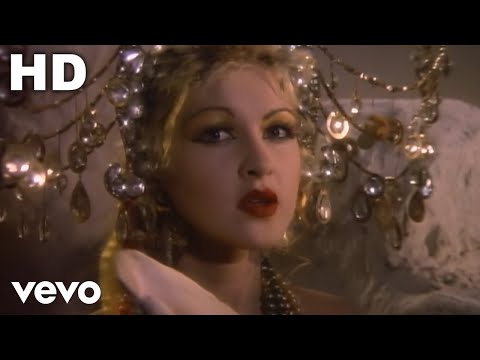
The process was not without its tensions – Lauper acknowledged there was “a lot of back and forth” during the rewriting – but Billy Steinberg ultimately embraced the transformation. He told her that she had invented her own “very exquisitely beautiful version” of the song. “That really meant a lot to me,” Lauper recalled. “It is a special song.”
It is, and so is the body of work Billy Steinberg leaves behind. In an era that too often mistakes volume for value, he was a songwriter who understood that a single perfectly chosen word could change everything. The songs endure. The legacy is assured.
Ad slot – sponsor or AdSense (hidden on live site)